


The Royal Tenenbaums: Wes Anderson and the art of visual storytelling
A revisit feature on the film 20 years after its release
Last Updated: 10.44 AM, Dec 14, 2021
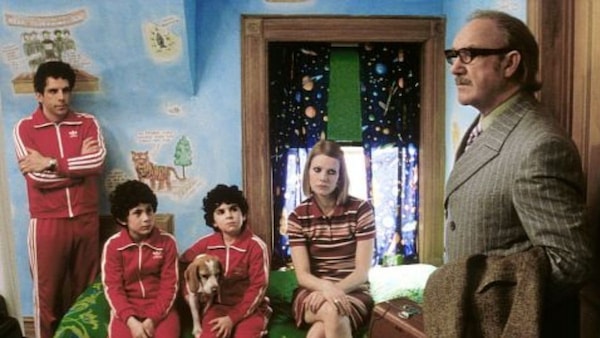
Wes Anderson is arguably one the most unique filmmakers of this era. His distinctive style has carved a niche of its own and he is widely regarded as a cinematic visionary who has reinvented conventional filmmaking. However, he isn’t a radical filmmaker who has completely abandoned established norms of cinema, but instead, it’s his execution of colour palettes, symmetry, set design, costume design, sound mixing, and editing. Films such as the Moonrise Kingdom, Isle of Dogs, Fantastic Mr Fox, The Grand Budapest Hotel, The Life Aquatic, and The Darjeeling Limited contain his signature style. All these films were well received by critics and have firmly established Anderson as a bonafide ‘rockstar’ when it comes to filmmaking.

One of the best works is The Royal Tenenbaums and is an underrated classic. The film adopts several of Anderson’s tropes, or rather, several films which he would make later in his career have used The Royal Tenenbaums as a template. The obvious ones would be his visuals and accompanying sound design for scenes, but the less obvious ones are how the young characters in his stories are often depicted as the more mature ones in contrast to their older counterparts who are depicted as childlike in their demeanour and logic.
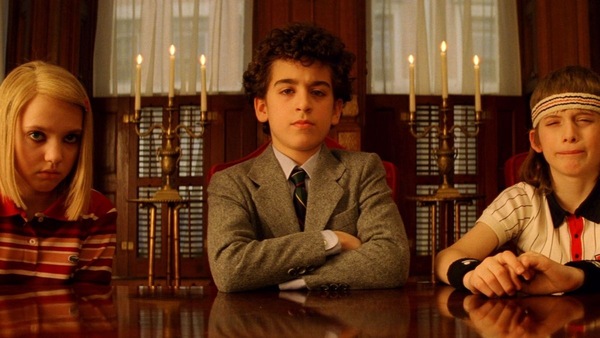
This could be analysed by how the Tenenbaum children Chas, Margot, and Richie are written as highly intelligent characters at a young age, far more level-headed and articulate than their father Royal Tenenbaum (Gene Hackman). Strangely enough, the children are shown to be a lot less sharper as adults. Each of the characters struggles with inner turmoil. Chas (Ben Stiller) has become paranoid about his children’s safety after losing his wife in an accident, the adopted daughter Margot (Gwyneth Paltrow) struggles with finding meaning and companionship in life, and Richie (Luke Wilson) is struggling to live with his secret love for Margot.
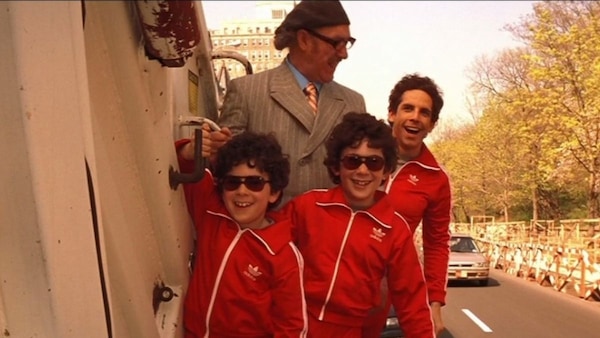
Their lives are portrayed by Anderson as if the film were a picture book with vibrant colours, costumes, and setting. Each scene has significant negative space in its shots to make the environment be part of the narrative. The house itself of the Tenenbaums has a personality, in a manner of speaking, of its own. This framing technique is used in several of Anderson’s films, and are instrumental in depicting the mood and time period. He also uses specific colour grading for these shots to accentuate the effect. It is one of the most standout aspects of the ‘Wes Anderson’ style.

Several filmmakers from past and present have used symmetry in frames to tell a story within a story. It is primarily used to aid the screenplay and a character’s arc in a particular scene. For instance, eye-line and symmetry is often used as a narrative tool to elevate a character’s power dynamic with respect to other characters. This was often used by Stanley Kubrick in several of his films including, A ClockWork Orange. In the film Kubrick crafts each scene with care, so that the audience are immediately aware that Alex (Malcolm McDowell) is the leader of the gang, without providing any exposition. A similar approach has been adopted by Anderson and has mastered the art, on par with Kubrick.
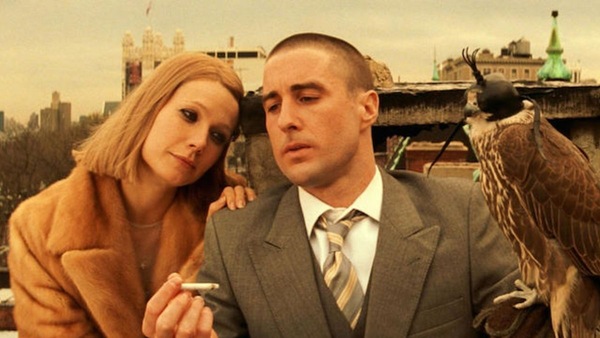
While there could be no arguments that Anderson uses cinematography and editing as a core element in his storytelling, it is the accompanying soundtrack or score that truly brings these scenes alive. Each of the pivotal scenes from The Royal Tenenbaums is accompanied by music that significantly elevates them, from Richie’s suicide to Mordecai’s return. The ‘Hey Jude’ by the Beatles during Mordecai’s return, offers an air of joy and celebration.
The Wes Anderson aesthetic might not be everyone’s cup of tea, but his dedication to his craft and his vision for offbeat storytelling about dysfunctional characters deserves immense praise. His latest film, The French Dispatch, has also been universally acclaimed as more people are introduced to his films.